
In This Article
Why the Back Is Such a Popular Canvas
The back is the largest, flattest stretch of skin on the body, and that makes it one of the most flexible placements a woman can choose. It can hold a tiny symbol between the shoulder blades just as comfortably as a full traditional back piece that takes several sessions to complete.
It is also one of the easiest placements to keep private. Most everyday clothing covers the back completely, while an open-back dress, swimsuit, or low top can reveal it whenever you choose. For many of our clients, that control over visibility is the biggest reason they choose the back over the arms or neck.
Because you rarely see your own back, it also tends to stay meaningful rather than becoming background noise. Many women describe a back tattoo as something personal they carry with them — a design for themselves first and for others second.
Choosing Your Back Tattoo Zone
Popular Back Tattoo Styles for Women
Traditional and neo-traditional back tattoos remain a strong choice: bold outlines, a limited but saturated palette, and classic motifs such as roses, swallows, daggers, and panther heads. Bold lines hold their shape for decades, which makes traditional work one of the most reliable styles for a large placement.
Fine-line florals and botanical designs suit women who want something delicate — a stem of wildflowers along the spine or a scattered bouquet across one shoulder blade. Fine-line work needs a slightly larger size than you might expect so the lines don't blur together as the skin ages.
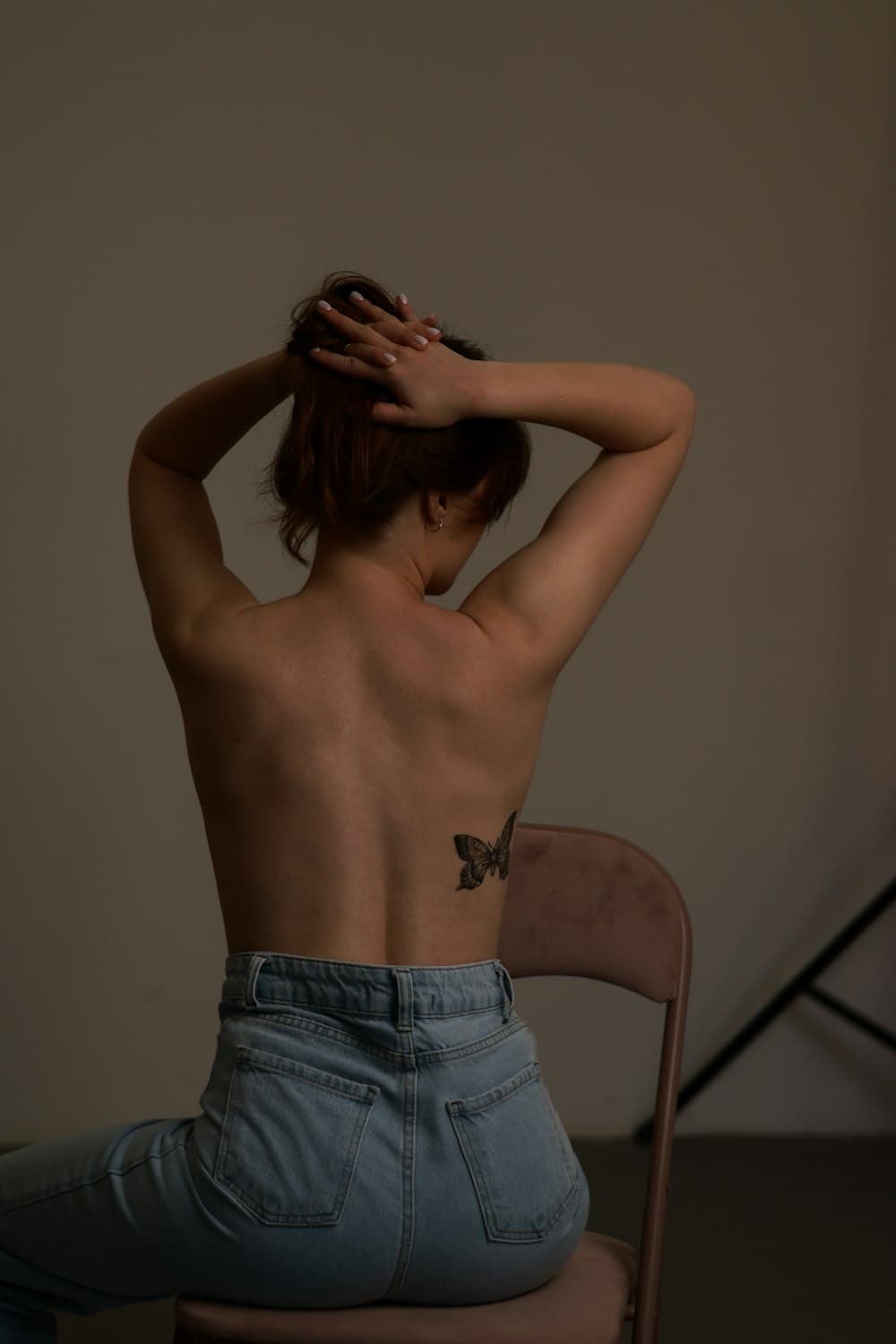
Butterflies, moths, and winged designs are naturally suited to the upper back because their symmetry matches the shoulder blades. Black-and-grey realism also performs beautifully on the back, since the large, flat area gives the artist room for smooth shading and fine detail. If you're unsure which style suits you, our guide comparing fine-line and traditional tattoos explains how each one ages.
Sizing, Flow & Body Shape
A good back tattoo works with your body rather than sitting on top of it. Your artist should consider how the design moves when you raise your arms, twist, or bend, and how it frames the curve of your spine and waist.
Think ahead as well. Many clients start with a single upper-back piece and later expand it toward the shoulders or down the spine. If there's any chance you'll want to add to it, mention that during your consultation so the first piece leaves room to grow naturally.
Check Placement in a Mirror
Before the needle touches your skin, ask your artist to let you check the stencil with two mirrors or a photo. Stand naturally, raise your arms, and twist slightly — the back moves more than people expect, and a few centimeters can change the whole look.
Pain Level by Area
Pain on the back varies by zone. The fleshy areas of the upper and outer back are usually among the more comfortable placements on the body. The spine itself, the shoulder blades, and the area just above the hips tend to be more sensitive because the skin sits closer to bone and nerves.
For large back pieces, the length of the session matters more than the exact spot. Plan multiple shorter sessions rather than one marathon sitting, eat well beforehand, and stay hydrated. Our first-tattoo pain chart has a full body-by-area breakdown if you'd like to compare placements.
Healing a Back Tattoo
The main challenge with a back tattoo is that you can't easily reach or see it. Ask a partner, friend, or family member to help wash and moisturize the area for the first couple of weeks, and wear loose, soft clothing to avoid friction from straps and waistbands.
Sleep on your side or stomach for the first few nights, avoid backpacks, and skip swimming until the skin has fully closed. Follow the full routine in our aftercare guide, and protect the tattoo with sunscreen once healed — backs get a lot of unexpected sun at the beach.
Key Takeaways
- The back can hold anything from a tiny symbol to a full multi-session piece
- Spine and upper-back placements are the most requested for women right now
- Traditional and bold designs age especially well on large back placements
- The spine and shoulder blades hurt more than the fleshy outer back
- Plan for help with aftercare, since the back is hard to reach
Frequently Asked Questions
How much does a back tattoo for women cost?
Small upper-back or spine designs often start around $150-$400, while large or full back pieces are usually priced by session and can range from $1,500 to $5,000+ depending on size, style, detail, and the number of sittings.
Is a spine tattoo very painful?
The spine is one of the more sensitive back placements because the skin sits directly over bone, but most clients describe it as manageable — especially for thin, vertical designs that can be completed in a single session.
Can a back tattoo be hidden for work?
Yes. Almost all back placements are completely covered by standard tops and shirts, which is one of the main reasons the back is so popular for a first large tattoo.


