
In This Article
Where This Style Came From
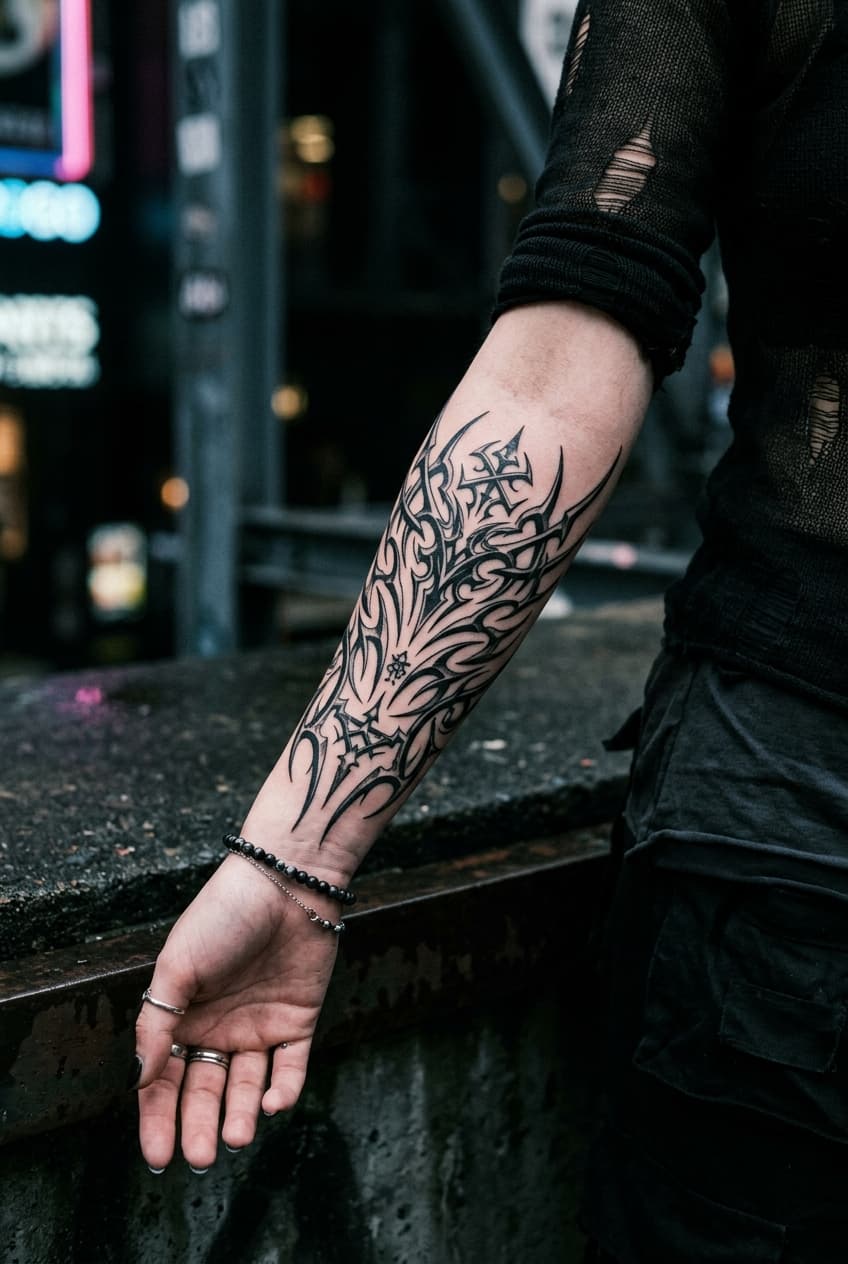
Cyber-sigilism grew out of early internet and Y2K digital subcultures, and this piece shows the style at its most refined: sharp, blade-like contours and webbed, almost circuit-like structures that feel more machine than skin.
Reading the Shapes
Unlike classic 90s tribal tattoos, which relied on solid black blocks, cyber-sigilism uses delicate stippling and chrome-inspired shading to suggest reflective, metallic surfaces. The flowing, spiked linework is designed to follow muscle contour rather than sit as a flat silhouette on top of it.
Why It's Everywhere Right Now
Part of a broader 2026 revival of Y2K design language across fashion and digital art, cyber-sigilism has spread fast through Pinterest and tattoo-inspiration accounts precisely because it looks unlike anything from the last two decades of tattoo trends.
Placement That Follows the Body
This style looks best when it follows the body's own lines — the forearm, spine, or across the shoulder blades — so the spiked, flowing shapes appear to move with the wearer rather than sit as a static patch of ink.
Frequently Asked Questions
Is cyber-sigilism the same as tribal tattooing?
It's a modern reinterpretation — it borrows the bold, flowing silhouettes of classic tribal work but replaces solid black fill with fine stippling and chrome-style shading.
Does this style require touch-ups sooner than solid blackwork?
The fine stippled shading can soften slightly faster than solid black fill, so a touch-up around the 5-7 year mark is common to keep the metallic gradient crisp.


