
In This Article
Paint Without a Brush
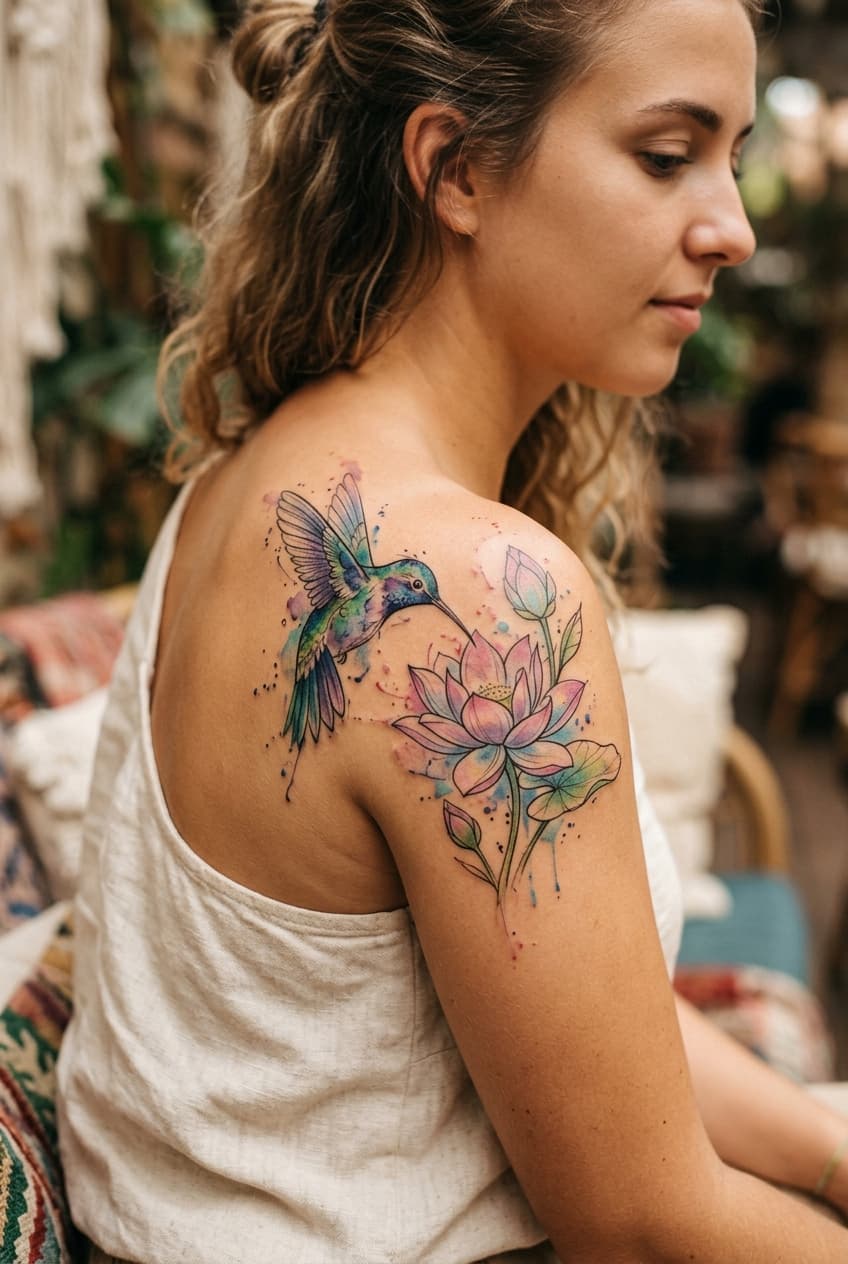
This piece pairs a hummingbird mid-flight with a blooming lotus, rendered in the soft, layered color bleed that defines watercolor tattooing. There's no heavy black outline holding the composition together — the color itself does the work.
How the Color Bleed Effect Works
Watercolor tattoos build up thin, diluted layers of ink to mimic the way pigment spreads and pools on wet paper. The hummingbird's body keeps a thin structural line for recognizability, while the surrounding color 'splashes' are applied freehand with soft edges rather than a hard border.
This is a technically demanding approach — without an outline to contain it, the artist has to control saturation and blending in real time as the skin absorbs ink differently than paper does.
Hummingbird and Lotus Meaning
Hummingbirds are widely associated with joy, energy, and resilience, given how much effort the tiny bird expends just to stay in place. The lotus, which blooms clean out of muddy water, is one of the most common symbols of rebirth and purity — together the pair reads as finding lightness and renewal through difficulty.
Caring for Color Without Bold Outlines
Because there's no thick black line anchoring the shape, watercolor pieces are more prone to visible softening over time than traditional or neo-traditional work.
Plan for Touch-Ups
We recommend budgeting for a color refresh every 5-8 years on watercolor work, and daily sunscreen once healed — UV exposure is the fastest way to dull the soft gradients.
Frequently Asked Questions
Does watercolor ink fade faster than traditional tattoos?
The soft edges soften somewhat faster since there's no bold outline to anchor the shape, but with SPF protection and proper aftercare, watercolor pieces can still look vibrant for many years.
How often does this style need a touch-up?
Most clients come back for a light color refresh every 5-8 years to restore the saturation of the softer blended areas.


